
Persons and organisations
Item set
- Type
- collection
- Identifier
- COL42
- Title
- Persons and organisations
- Description
- Persons and organisations associated with an item, such as their creator, owner, publisher, or user.
Items
-
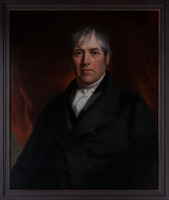 Salt, Daniel Daniel was the father of Sir Titus Salt. He initally worked as a drysalter and as a sheep farmer. He married Grace Smithies of Morley, near Leeds on 5 July 1802. Between 1813 and 1819 the family lived at The Manor House in Morley. From the 1920s up to 1833 Daniel ran a textile business of 'Daniel Salt and Son' with Titus. They made a lot of use of Donskoi wool from Russi in the production of worsted cloth.
 -
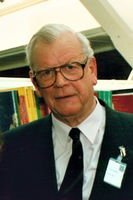 Salt, Denys Denys Salt was the great-grandson of Sir Titus and Caroline Salt, grandson of Titus Junior and Catherine Salt, and son of Harold Salt. For more than 50 years, Denys was the member of the Salt family who did most to sustain the family’s links with Saltaire. His encouragement to generations of historians, his contributions to local archives, libraries and museums, and his support of activities in Saltaire were of invaluable benefit to the local community. Denys donated an important set of documents, photographs and other objects to the Saltaire Collection, most concerning the Salt family.
 -
 Salt, Edward Third-born son of Sir Titus and Caroline Salt
 -
Salt, Fanny Second daughter of Sir Titus and Caroline Salt. She died of tuberculosis just days before her twentieth birthday.
-
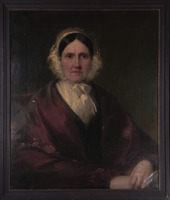 Salt, Grace Grace was the mother of Sir Titus Salt. She was born Grace Smithies and lived in Morley near Leeds. She married Daniel Salt on 5 July 1802.
 -
Salt, Herbert Crossley First-born son of Sir Titus and Carolione Salt
-
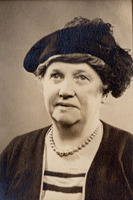 Salt, Isabel Isabel Salt, granddaughter of Sir Titus Salt, was the only daughter of four children of Titus Salt Junior and his wife Catherine. By the age of twelve her family had entertained two visits of Royalty and mourned the death of her father. By the late 1890s Isabel had started to work for the welfare of the poor and the independence and equality of women. She became continually active in the Women’s Liberal Association and became a prominent speaker on getting women’s right to vote, although she clearly stated that she was a suffragist not a suggragette. Isabel was also a committed and campaigning pacifist, a subject that became highly contentious during the First World War. Many of Isabel's campaigning speeches and letters to the newspapers are recorded in her own newscutting books, part of the Saltaire Collection alongside travel diaries, letters, photographs, clothing and an intriguing tin of acorns.
 -
Salt, Lawrence Son of Titus Salt Junior and Catherine Salt.
-
Salt, Mary Third daughter of Sir Titus and Caroline Salt. She died in infancy of 'congestion of the brain'.
-
Salt, Nicholas A great-grandson of Titus Junior and Catherine Salt, and great-great grandson of Sir Titus Salt.
-
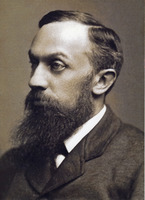 Salt, Titus, Junior Titus Salt Junior (1843–1887) was the fifth and youngest surviving son of Sir Titus Salt, the founder of Saltaire. Titus Junior was the member of the Salt family most likely to inherit his father’s business acumen and public role, playing a critical part in the final development of the village's public amenities, particularly its educational facilities. He entered the family firm in 1863 at age 20 and eventually managed it alongside his brothers. However, his tenure saw significant financial difficulties due to international trading issues and investments in the United States, eventually leading the company toward voluntary administration shortly after his death. In 1866, he married Catherine Crossley, daughter of a wealthy Halifax carpet manufacturer. They had four children: Gordon, Harold, Lawrence, and Isabel. He purchased the Milner Field estate near Saltaire and built a grand mansion that contrasted with the village's Italianate style. The house featured luxurious interiors, extensive conservatories, and a boating lake, and was used to host royalty, including the Prince and Princess of Wales in 1882. Perhaps Titus Junior is best remembered for his passionate promotion of education for all ages. He served as the Chairman of the Shipley Schools Board and was vociferous in organizing both day and night school provision. Along with his wife Catherine, he was an early advocate for the Friedrich Froebel 'Kindergarten' method for children under five. He successfully campaigned for the opening of the Albert Road Board School (now Saltaire Primary School) in 1878 to accommodate the growing number of elementary students. Titus Junior proposed building a new School of Art and Science as a memorial to his father. To fund it, he organized the Royal Yorkshire Jubilee Exhibition in 1887, which was opened by Princess Beatrice, Queen Victoria's youngest child. This final project, the Royal Yorkshire Jubilee Exhibition, proved to be a source of immense stress. Despite its popularity, it did not raise the anticipated funds and resulted in a significant financial loss. On November 18, 1887, after feeling 'indisposed' and sending apologies for an exhibition committee meeting, Titus Junior returned to Milner Field. He was found unconscious in his smoking room and died shortly after at the age of 44. Titus Junior’s legacy is deeply tied to the Exhibition Building, which continued to provide technical education for over a century and is now part of Shipley College. He is remembered for his dedication to the social and intellectual well-being of the Saltaire community, especially through the establishment of its 'fine group' of schools.
 -
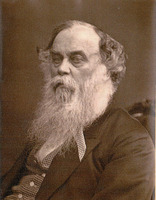 Salt, Titus, Sir Major textile industrialist, businessman and philanthropist in nineteenth century Bradford. Commisioned the building of Salts Mill and Saltaire.
 -
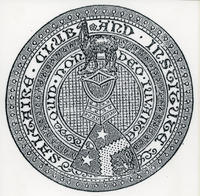 Saltaire Club and Institute The Saltaire Club and Institute opened in 1870 and was based in a large new building on Victoria Road, above Salts Mill. The building is now referred to as Victoria Hall. Although not part of the temperance movement, Titus Salt was staunchly opposed to the construction of a public house in his village, having seen many workers in Bradford drink their wages away as soon as they were paid and fail to provide for their families. Residents were free to drink at home or at pubs outside the village but Salt hoped they would be attracted by the more immediate Social Club and Institute. The founding rules of the Club and Institute stated that its objects were 'to afford to the inhabitants of Saltaire, and its neighbourhood, the means of social intercourse, mutual help, mental and moral improvement and rational recreation, also to afford facilities for holding meetings of Friendly and other Societies'. There was a small quarterly charge for membership, whch was open to men, women and young people over the age of 13. The building housed rooms for billiards, bagatelle, chess and drafts, reading, classrooms, an extensive library, a laboratory and a large hall for lectures and concerts. In the 1880s it housed the Schools of Art and Science before they moved to the purpose-built Exhibition Building.
 -
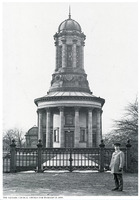 Saltaire Congregational Church Titus Salt was a member of the non-conformist Congregational Church. He commisioned an elaborate church building which was built opposite Salts Mill. Since 1859 it has been the home of the Saltaire Congregational Church and its successor organisation the United Reformed Church.
 -
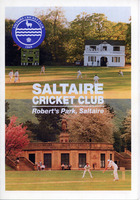 Saltaire Cricket Club Saltaire Cricket Club was founded in 1869 and still operates today. It's home has always been Roberts (orginally Saltaire) Park where it has a scenic pitch and pavillion with a backdrop of the River Aire, Salts Mill and the United Reformed Church. Among its more famous players was the England bowler Sydney Barnes who played for the club between 1915 and 1925 and helped Saltaire win the Bradford League three times. Jim Laker, the outstanding England spin bowler of the 1950s, lived in Shipley, attended the Salt High School and played for the Cricket Club in the late 1930s. The club remains very active today playing in the Aire & Wharefdale Senior Cricket League.
 -
 Saltaire Festival Saltaire Festival is a voluntary organisation that produces a major, very popular entertainment festival in Saltaire in September each year.
 -
Saltaire Inspired Saltaire Festival is a visual arts charity that organises art-related events in Saltaire. These include: the Saltaire Arts Trail in May; the Saltaire Makers Fair in May and October; the Saltaire Living Advent Calendar in December.
-
Saltaire Learning Saltaire Learning was a group of interested parties from Saltaire and the wider Bradford area and from the City of Bradford Metroplitan District Council brought together to act on the recommendations of a report on the educational potential of Saltaire (see 2018.60.1).
-
Saltaire Memories Group Voluntary group active in Saltaire in late twentieeth century recording the memories of residents of the village and workers at Salts Mill
Catalogue data (excluding media) available under Creative Commons Attribution-ShareAlike (CC BY-SA 4.0) licence.
81–100 of 126