
Items
Search full-text
https://www.galaxus.ch/en/sector/showdiscussion/snapbreaker-com-visit-kunghaccom-0djtgb2m-223198
-
 Pace Micro Technology Pace Microtechnology Ltd was a Bradford-based company that originally sold software for early Apple personal computers. During the 1980s the company began designing and manufacturing data communication modems and later satellite TV receivers and video recorders. By the late 1990s and into the 21st century, PACE collaborated with major, well-known tech giants such as BSkyB and Amstrad. This local business had become an international multi-million-pound enterprise and put Pace at the front of the digital revolution. From the late 1980s Pace based its business in Salts Mill. They became the first major tenant of local entrepreneur Jonathan Silver who purchased Salts Mill in the late 1980s following its closure as a working textile mill. The huge success of Pace and the company's presence in Salts Mill played an important role in the transformation of Saltaire from an old, decaying industrial mill and village into a thriving modern enterprise and desireable place to live.
 -
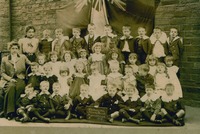 Albert Road School A new primary school on Albert Road in Saltaire was opened in 1878, its creation supported by husband and wife Titus Salt Junior and Catherine Salt. It has remained a primary school until the present day. When it opened, Children at the Albert Road schools were taught in mixed classes of around 40 children, although boys and girls were still seated in separate halves of the room, and corporal punishment was forbidden. At the time, the Shipley and Saltaire Times reported that people were doubtful whether this new approach to education would work. Shortly after their opening, the same newspaper printed a report on the schools and retracted their earlier criticism.
 -
 Edward VII, King Edward was king of the United Kingdom between 1901 and 1910. As the Prince of Wales, he visited Yorkshire in 1882 with his wife Princess Alexandra to preside at the opening of the new Technical College in Bradford. While visiting, the prince and princess stayed at Milner Field, the home of Titus Junior and Catherine Salt.
 -
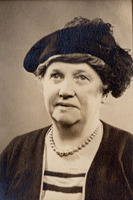 Salt, Isabel Isabel Salt, granddaughter of Sir Titus Salt, was the only daughter of four children of Titus Salt Junior and his wife Catherine. By the age of twelve her family had entertained two visits of Royalty and mourned the death of her father. By the late 1890s Isabel had started to work for the welfare of the poor and the independence and equality of women. She became continually active in the Women’s Liberal Association and became a prominent speaker on getting women’s right to vote, although she clearly stated that she was a suffragist not a suggragette. Isabel was also a committed and campaigning pacifist, a subject that became highly contentious during the First World War. Many of Isabel's campaigning speeches and letters to the newspapers are recorded in her own newscutting books, part of the Saltaire Collection alongside travel diaries, letters, photographs, clothing and an intriguing tin of acorns.
 -
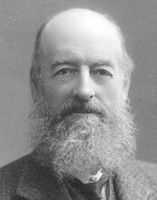 Parsons, Lawrence, Earl of Rosse Member of the Irish peerage, famed amateur astronomer, and large landholder in the Shipley area.
 -
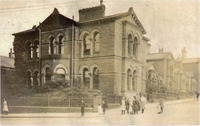 Sir Titus Salt's Hospital Sir Titus Salt’s Hospital was opened in Saltaire in September 1868 and provided crucial medical help many decades before the foundation of the National Health Service.
 -
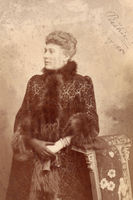 Beatrice, Princess Princess Beatrice was the youngest child of Queen Victoria. In 1887 she visited Saltaire with her husband Prince Henry of Battenburg to preside at the opening of the Royal Yorkshire Jubilee, an exhibition to celebrate her mother's silver jubilee, and organised by TItus Salt Junior in honour of his father and to help funding of the new School of Art and Science in the village. The Royal party stayed with Titus Junior and his wife Catherine at thier home of Milner Field.
 -
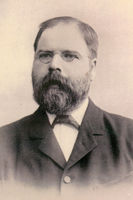 Wright, Joseph Born into very humble circumstances in Idle, Bradford. Basic school education was at the Salt Factory School, Saltaire. Wright went on to study at the University of Heidelberg and eventually became a professor of philology at the University of Oxford and an eminent linguist.
 -
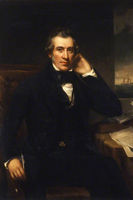 Fairbairn, William William was a leading British engineer and was contracted by Titus Salt to design the interior of Salts Mill. William's significant engineering skills enabled the mill to operate smoothly and perform all the functions that took raw materials through the series of processes required to make high quality cloth. William was responsible for the Mill's iron structure, the lay-out of the machinery, the design and manufacture of the boilers, steam engines and line-shafting. He also designed a tubular-girder bridge over the river Aire that runs through the village. Fairbairn published his plans for the mill in a book that ran to four editions and was translated into French and Spanish. He was justly proud of Salts Mill, his largest work of mill construction.
 -
 Fowler Calculators Fowler Calculators was a Manchester company that was founded as the Scientific Publishing Company in 1898 by William Henry Fowler. Besides their range of calculators, they were well known for their range of engineering pocket books that they published annually. Their address was 53 New Bailey Street (1900-9 at least) and their works were later in Hampson Street, Sale. They went into liquidation in 1988. (http://www.mathsinstruments.me.uk/page17.html)
 -
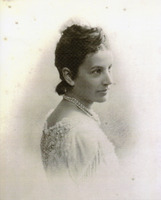 Salt, Catherine Catherine was born in 1846 into one family of textile magnates, the Crossleys of Halifax, and married into another when Titus Salt Junior became her husband in 1866. In some ways Catherine was quite conventional, raising four children and running her privileged Victorian household, including hosting the Prince of Wales and later his sister Princess Beatrice at her home. But Catherine clearly had deep and wide interests in social and educational issues, particularly the education of girls. She helped found Bradford Girls Grammar School and served for many years on its board, and also the board of the Salt Schools.
 -
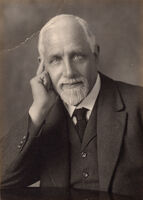 Rae, Henry Norman, Sir Rae was a highly successful textile businessman and Liberal politician. Rae did his apprenticeship in the woollen trade and went into partnership with William Pickles as Pickles and Rae, woolcombers in Laisterdyke, Bradford. Rae was a good business man the firm flourished and opened offices in Melbourne, Sydney, Adelaide and Brisbane. He even bought some land in Australia and called it Greenhill Farm. Due to this Norman Rae and his wife travelled in Australia regularly.
 -
 Ajeeb, Mohammed Bradford councillor and Lord Mayor in 1985-1986
 -
George VI, King King of the United Kingdom 1936-1952. In October 1937, King George and Queen Elizabeth visited Salts Mill.
-
Silver, Jonathan Jonathan Silver was a Bradford-born entrepreneur who bought the vacant Salts Mill in 1987. He led the regeneration of the Mill into a thriving commercial, retail, leisure and artistic centre.
-
 Bradford Telegraph & Argus The Telegraph & Argus is a daily newspaper for the Bradford area.
 -
Ordnance Survey The Ordnance Survey (OS) is the national mapping agency for the United Kingdom.
-
Carr, Henry Henry Carr was a renowned British portrait and landscape artist. Between 1957 and 1959 he painted 14 murals showing the stages of textile production at Salts Mill.
-
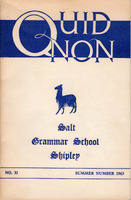 Salt Grammar School The successor school to the Salt High Schools following the education reforms of 1944. It subsequently became the comprehensive Sir Titus Salt school and is now located just outside Saltaire on the north side of Roberts Park.
 -
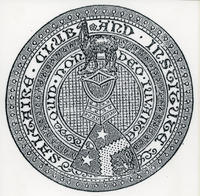 Saltaire Club and Institute The Saltaire Club and Institute opened in 1870 and was based in a large new building on Victoria Road, above Salts Mill. The building is now referred to as Victoria Hall. Although not part of the temperance movement, Titus Salt was staunchly opposed to the construction of a public house in his village, having seen many workers in Bradford drink their wages away as soon as they were paid and fail to provide for their families. Residents were free to drink at home or at pubs outside the village but Salt hoped they would be attracted by the more immediate Social Club and Institute. The founding rules of the Club and Institute stated that its objects were 'to afford to the inhabitants of Saltaire, and its neighbourhood, the means of social intercourse, mutual help, mental and moral improvement and rational recreation, also to afford facilities for holding meetings of Friendly and other Societies'. There was a small quarterly charge for membership, whch was open to men, women and young people over the age of 13. The building housed rooms for billiards, bagatelle, chess and drafts, reading, classrooms, an extensive library, a laboratory and a large hall for lectures and concerts. In the 1880s it housed the Schools of Art and Science before they moved to the purpose-built Exhibition Building.
Catalogue data (excluding media) available under Creative Commons Attribution-ShareAlike (CC BY-SA 4.0) licence.
81–100 of 460