
Items
Search full-text
https://www.galaxus.ch/en/sector/showdiscussion/snapbreaker-com-visit-kunghaccom-0djtgb2m-223198
-
 Iwakura Embassy The Iwakura Embassy (or Iwakura Mission) was a diplomatic mission to North America and Europe from 1871 to 1873. Leading Japanese scholars and statesmen visited major industrialised nation to raise the profile of Japan following its period of isolation that had ended in the 1850s. They were also involved in trying to renegotiate trade agreements, and tasked with gathering information on modern industrial, educational, military and political processes and structures. In Autumn 1872 the Iwakura Embassy visited Saltaire as an example of a model industrial village and modern, integrated textile mill. They were interested in the amenities of the village as well as the mill itself.
 -
Bradford Industrial Museum The public museum is a former worsted spinning mill in Bradford. It contains permanent displays of textile machinery, steam power, engineering, printing machinery and motor vehicles as a testament ot Bradford's industrial heritage.
-
City of Bradford Metropolitan District Council The local government authority for the Bradford area which includes Saltaire. The council was formed in 1974 as part of the national local government reorganisation. Saltaire had previously fallen under Shipley Urban District Council.
-
 Illingworth, Percy Percy Illingworth was the Member of Parliament for Shipley in the early 20th century. He presided at the opening of a new cricket Pavillion for Saltaire Cricket Club that had been funded by Sir James Roberts.
 -
Illingworth Morris and Company Limited Illingworth Morris was a large Textiles business. Between 1957 and 1986 it owned and operated Salts Mill.
-
Briggs, Asa Leading twentieth century British historian
-
Dickens, Charles Renowned nineteenth century novelist. Dickens wrote an article in his Household Words publication entitle 'The Great Yorkshire Llama' regarding the early days of Titus Salt's discovery and use of Alpaca wool.
-
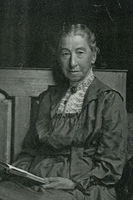 Byles, Harriet Harriet Byles (1853–1937) was a prominent progressive educator who served as the second and longest-serving headmistress of the Salt Girls' High School in Saltaire. Appointed in 1886 as the successor to [ Medina Griffiths](https://www.saltairecollection.org/story-of-saltaire/biographies/ medina -griffiths/), she led the school for 34 years until her retirement in 1920. Background and Appointment - Family: She was born into a prominent non-conformist, Liberal-supporting family in Bradford; her father, William Byles, was the proprietor and editor of the *Bradford Observer*. - Early Career: She taught at the Salt Girls' High School under Medina Griffiths before being promoted to headmistress in 1886. Leadership and School Expansion Under Byles' leadership, the school underwent significant growth and modernization: - Physical Expansion: In 1906, due to an increase in student numbers (partly from absorbing a local pupil teacher centre), the school premises were expanded with a second storey, adding three classrooms, a laboratory, and a domestic science room. - Increased Access: In the early years, the school received no government funding, making it difficult for poorer students to attend. Byles successfully obtained scholarships from the West Riding County Council, which allowed more girls from disadvantaged backgrounds to enroll. - University Progression: A considerable number of her students progressed to higher education, particularly the University of Leeds. Educational Philosophy Byles was known for an inclusive and trust-based approach to education: - Individual Potential: She believed in ensuring every girl achieved her full potential, regardless of her future path. She famously supported the view that schools should not just focus on 'clever' students to win successes while neglecting the 'rank and file'. - Corporate Responsibility: She fostered a strong spirit of comradeship and provided students with 'liberty combined with trust,' which she believed developed a high sense of individual and social responsibility. - Successful Alumni: Her students went on to achieve high-ranking positions, including Edith Dolby (headteacher of Bedford Girls Modern School), Dr. Hilda Byles (head of the Women's Hospital in Hankow), and others who became factory inspectors, medical missionaries, and secretaries to the League of Nations. Retirement and Legacy - Parting Gift: Upon her retirement in 1920, her colleagues presented her with a pony and trap, which she used to travel around her new home in the village of Austwick. - Historical Record: In retirement, she wrote a written reminiscence and an account of her time at the school, which the Saltaire Collection identifies as an invaluable source for understanding the history of education during that period. The Saltaire Collection preserves several items related to her tenure, including her letter of thanks for her retirement gift and copies of her school history.
 -
 Roberts, James, Sir Sir James Roberts was a prominent industrialist and philanthropist who is widely credited with 'saving Saltaire' and preserving its industrial heritage after the Salt family business faced financial collapse in the early 1890s. He rose from humble origins to become the sole owner of Salts Mill and the Saltaire estate, shepherding the village through the challenges of the early 20th century. Early Life and Business Rise Born in Oakworth to a weaver, Roberts came from a family with few resources. Neither of his parents were literate. He began working part-time in a spinning mill at age 11. Roberts eventually became a successful wool merchant. He gained a significant competitive advantage through his extensive knowledge of and frequent travels to Russia to source merino wool, eventually becoming fluent in the Russian language. Ownership and Management of Saltaire In 1893, after the Salt family business entered voluntary administration, Roberts joined a four-man consortium to purchase the mill and the village. By 1902, he became the sole owner of Salts Mill and the Saltaire estate. Under his leadership, the business returned to high profitability. He oversaw a major extension of Salts Mill, increasing its size by approximately one-third through the addition of a new spinning block and dyeing areas. In 1903, he purchased the **Milner Field** estate, the former home of Titus Salt Junior, from Salt's widow, Catherine. Preserving Salt’s Legacy and Philanthropy Roberts maintained Sir Titus Salt’s principles, sustaining annual payments to Salt’s charities and never changing the name of the business from 'Sir Titus Salt Bart. and Sons Co. Ltd.'. In 1903, to celebrate Saltaire's 50th anniversary, he commissioned the statue of Sir Titus Salt that still stands in the village park. In 1920, he gifted the village park to the Bradford Council for public use, requesting it be renamed Roberts Park in memory of his late son, Bertram. He purchased the Brontë Parsonage in Haworth for the Brontë Society in 1928 to serve as a museum. He also gifted £10,000 to the University of Leeds to create a professorship in Russian language and literature. Public Service and Recognition Roberts served on the Shipley Urban District Council and the West Riding County Council, and was a Justice of the Peace for West Yorkshire. He was also a governor for the Salt Schools. In 1909, he was awarded a baronetcy, becoming Sir James Roberts, First Baronet of Milner Field. To celebrate, he gave his workers a week of paid holiday and established a pension scheme for those over 65. Personal Tragedies and Sale of the Estate Roberts’ tenure of Saltaire was marked by significant personal loss as three of his four sons died prematurely: - His eldest son, Willy, died of tuberculosis in 1898. - His youngest, John Edward, drowned in Ireland in 1904. - His son Bertram, who was being groomed to take over the business, died in 1912. - His remaining son, Harry, was so seriously injured in World War I that he could not continue in the business. Due to these tragedies and his own declining health, Roberts sold the mill and the village in 1918 to a new syndicate. Upon the sale, he gave generous gifts to his employees totaling approximately £20,000 to £30,000. He died in 1935 at the age of 87.
 -
Lockwood, Henry Francis Influential British architect. In 1849 he formed a highly successful partnership with William Mawson. They designed major buildings in Bradford, including St George's Hall and the Wool Exchange. Sir Titus Salt engaged them to desgn his new Salts Milll and its surrounding village of Saltaire, including its many publoic buildings.
-
Mason, Pamela Pamela Mason was the daughter of Isidore Ostrer, one of the owners of Illingworth, Morris and Company Limited who purchased the Salts (Saltaire) Ltd business, including Salts Mill, in the 1950s. Following Isidore's and his brother's Maurice deaths in 1975, Pamela controlled 46% of the shares of Illingworth, Morris. She became involved in a dispute with the 'Yorkshire Directors' over the future of the company. This was well-reported in the press, partly because Pamela Mason was a Hollywood celebrity, having been a chatshow host and the ex-wifr of the leading actor James Mason.
-
Tennant, Emily Emily was born in Baildon to James Tennant and Elizabeth Willis. Emily began work in Saltaire Mill in Octber 1901 aged just 14. She worked in the spinning department until 1936 and then as a cleaner for a further 25 years in the engine room and later in the yarn office. In 1953 Emily received a Long Service Certificate from Salts (Saltaire) Ltd in recognition of her 50 years service. From 1911 Emily lived with her parents and sister in Shipley and died in 1974 aged 87 and was buried in Nab Wood Cemetery, Shipley.
-
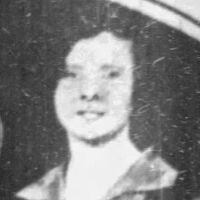 Pickles, Carrie For the first time, in 1928, women were taking part in the gymnastics section of the Olympic games. A young woman from Shipley, Carrie Pickles, was among those chosen, not because of any special gym education at school, but because she had joined the Bradford Gymnastics Club in 1919 and worked hard to gain Yorkshire and British championships. The Olympic team competed with five other women’s teams and gained a bronze medal. They could not afford to stay on for an extra day to receive it, so it was sent after them. Carrie then retired and moved to teaching and coaching within the community, chiefly at the Saltaire Ladies’ Gymnastic Club. She trained other champions, including her own daughter, Lilian.
 -
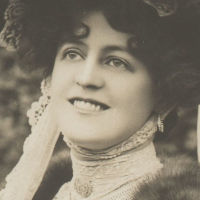 Lupton, Caroline Maria Born in Eccleshill and raised in Baildon and Shipley, Maria attended Salt Girls’ High School before joining her mother in London at the age of 15 years. Having changed her name to Marie Studholme and needing a source of income, she joined the chorus of La Cigale at the Lyric Theatre and her long, successful career in musical theatre begun. She played leading and support roles in productions in London, across the country and in the USA. In 1914 she returned briefly to Bradford to perform at the newly opened Alhambra music-hall. Cheering crowds surrounded the theatre, keen to see the star in her hometown. Marie was a renowned beauty and this made her one of the most popular postcard models of her time. But this also brought her trouble, as she was constantly pursued by devoted anonymous admirers. Occasionally, her image was falsely used in advertising campaigns. Marie died in 1930 after an attack of rheumatic fever. She left an estate of £58,303, (approximately £49.5 million in 2026).
 -
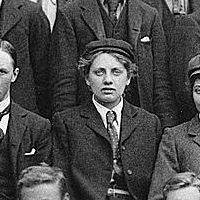 Gunnell, Edna Mary Edna Gunnell was a trailblazer in the world of horticultural education for women. Graduating from Salt Girls’ High School, she attended University College Reading obtaining a Certificate in Horticulture in 1900. One of only a few women to be trained at the Royal Botanic Gardens, Kew she subsequently held various teaching posts in England, Silesia, Germany and USA. In 1920 she joined Devon County Council as a Horticultural Superintendent, the first woman to hold the post and, as part of her role, gave lectures and demonstrations to Women’s Institutes and to schools. At first her lecturers focussed on growing, garden maintenance and pest control but during World War 2 the emphasis changed to fruit growing and food preservation: bottling, jam making, pickles and chutneys. In 1945 she received an OBE in recognition of this work.
 -
Fry, William William Fry started working life on the railways but his life was transformed in his thirties when he moved to Saltaire to become the long-serving Secretary and General Manager of the Salt Schools. The 'Salt Schools eventually incorporated the High School (for Girls and Boys), the Saltaire Club and Institute, and the Technical and Art School In the late 1880s a new School of Art and Science was instigated by Titus Salt Junior. To help fund the new school and partly celebrate its opening, and Queen Victoria's diamond jubilee, Salt devised the Royal Yorkshire Jubilee Exhibition. William Fry became heavily involved in its planning, travelling round the country to visit other exhibitions at Edinburgh, Folkestone and Liverpool as well as the Colonial Exhibition in London. He wrote numerous letters to obtain exhibits and enlist support for the Exhibition. This was a difficult task because of competition with other exhibitions and attractions. William wrote that ‘obscurity, too small an affair’ were ‘prominent ideas to be combated’. William also became Secretary of the Sir Titus Salt's Hospital, likely after the management ot the hospital was passed to the Salts School Board in 1887.
-
 2018.37.1: Salad plate Salad plate, one of a full Davenport, decorated dinner service purchased by Catherine and Titus Salt Junior. They were probably used for dinner parties, but were defiantly used for the Royal Visits in 1882 for the visit of Prince and Princess of Wales.
 -
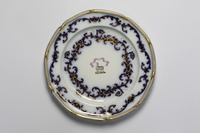 2018.37.4: Soup plate Soup plate, one of a full Davenport, decorated dinner service purchased by Catherine and Sir Titus Salt Junior. They were probably from used for dinner parties, but were definitely used for the Royal Visits in 1882 for the visit of Prince and Princess of Wales.
 -
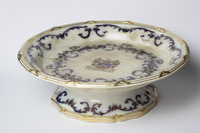 2018.37.5: Footed serving dish Footed serving dish, one of a full Davenport, decorated dinner service purchased by Catherine and Sir Titus Salt Junior. They were probably from used for dinner parties, but were definitely used for the Royal Visits in 1882 for the visit of Prince and Princess of Wales.
 -
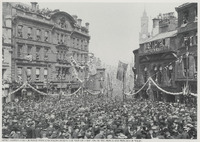 2024.56.6: Little Horton Lane Photograph of a large crowd of people completely filling a square on Little Horton Lane in Bradford on 4 May 1904 during a visit by the Prince and Princess of Wales. Bunting is hung at the sides of the streets. One building has a sign 'Appleton & Co.'. People are also visible in windows and on the roofs of buildings.
Catalogue data (excluding media) available under Creative Commons Attribution-ShareAlike (CC BY-SA 4.0) licence.
101–120 of 460