
Items
Search full-text
without cvv, 【 Visit Amsiga.com 】 ojM3t2s., cc fullz store, bins and fullz, top cc dump sites MoHS
-
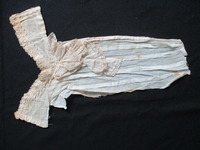 2016.2.9: Collar and frontal Cream collar and frontal made from fine cotton and lace with pin tuck design and floral lace edging. 4 bone stiffeners in the collar. Collar has horizontal pintucks with 2cm deep floral lace border. Frontal has vertical pintucks with a lace edged bow from bottom of collar to 19cm. there are 6 hooks to back of neck, w to lower right of the collar and 6 to right side of the frontal. there are no corresponding eyes.
 -
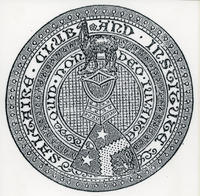 Saltaire Club and Institute The Saltaire Club and Institute opened in 1870 and was based in a large new building on Victoria Road, above Salts Mill. The building is now referred to as Victoria Hall. Although not part of the temperance movement, Titus Salt was staunchly opposed to the construction of a public house in his village, having seen many workers in Bradford drink their wages away as soon as they were paid and fail to provide for their families. Residents were free to drink at home or at pubs outside the village but Salt hoped they would be attracted by the more immediate Social Club and Institute. The founding rules of the Club and Institute stated that its objects were 'to afford to the inhabitants of Saltaire, and its neighbourhood, the means of social intercourse, mutual help, mental and moral improvement and rational recreation, also to afford facilities for holding meetings of Friendly and other Societies'. There was a small quarterly charge for membership, whch was open to men, women and young people over the age of 13. The building housed rooms for billiards, bagatelle, chess and drafts, reading, classrooms, an extensive library, a laboratory and a large hall for lectures and concerts. In the 1880s it housed the Schools of Art and Science before they moved to the purpose-built Exhibition Building.
 -
 Roberts, James, Sir Sir James Roberts was a prominent industrialist and philanthropist who is widely credited with 'saving Saltaire' and preserving its industrial heritage after the Salt family business faced financial collapse in the early 1890s. He rose from humble origins to become the sole owner of Salts Mill and the Saltaire estate, shepherding the village through the challenges of the early 20th century. Early Life and Business Rise Born in Oakworth to a weaver, Roberts came from a family with few resources. Neither of his parents were literate. He began working part-time in a spinning mill at age 11. Roberts eventually became a successful wool merchant. He gained a significant competitive advantage through his extensive knowledge of and frequent travels to Russia to source merino wool, eventually becoming fluent in the Russian language. Ownership and Management of Saltaire In 1893, after the Salt family business entered voluntary administration, Roberts joined a four-man consortium to purchase the mill and the village. By 1902, he became the sole owner of Salts Mill and the Saltaire estate. Under his leadership, the business returned to high profitability. He oversaw a major extension of Salts Mill, increasing its size by approximately one-third through the addition of a new spinning block and dyeing areas. In 1903, he purchased the **Milner Field** estate, the former home of Titus Salt Junior, from Salt's widow, Catherine. Preserving Salt’s Legacy and Philanthropy Roberts maintained Sir Titus Salt’s principles, sustaining annual payments to Salt’s charities and never changing the name of the business from 'Sir Titus Salt Bart. and Sons Co. Ltd.'. In 1903, to celebrate Saltaire's 50th anniversary, he commissioned the statue of Sir Titus Salt that still stands in the village park. In 1920, he gifted the village park to the Bradford Council for public use, requesting it be renamed Roberts Park in memory of his late son, Bertram. He purchased the Brontë Parsonage in Haworth for the Brontë Society in 1928 to serve as a museum. He also gifted £10,000 to the University of Leeds to create a professorship in Russian language and literature. Public Service and Recognition Roberts served on the Shipley Urban District Council and the West Riding County Council, and was a Justice of the Peace for West Yorkshire. He was also a governor for the Salt Schools. In 1909, he was awarded a baronetcy, becoming Sir James Roberts, First Baronet of Milner Field. To celebrate, he gave his workers a week of paid holiday and established a pension scheme for those over 65. Personal Tragedies and Sale of the Estate Roberts’ tenure of Saltaire was marked by significant personal loss as three of his four sons died prematurely: - His eldest son, Willy, died of tuberculosis in 1898. - His youngest, John Edward, drowned in Ireland in 1904. - His son Bertram, who was being groomed to take over the business, died in 1912. - His remaining son, Harry, was so seriously injured in World War I that he could not continue in the business. Due to these tragedies and his own declining health, Roberts sold the mill and the village in 1918 to a new syndicate. Upon the sale, he gave generous gifts to his employees totaling approximately £20,000 to £30,000. He died in 1935 at the age of 87.
 -
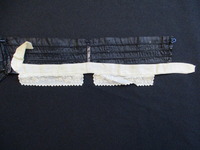 2016.2.48: Mourning Collar and Sash Black silk collar with 4 stiffening cords running horizontally with vertical tortoiseshell stiffening banc to centre. Cream cotton lace piece attached to lower edge with a flower design and scalloped edge. Two black silk sashes/ties attached to one end of the collar which hang down the back. The silk ties are shaped to a point. Small buttonhole on collar where the ties are attached. 2 sets of hools and eyes to edge of collar.
 -
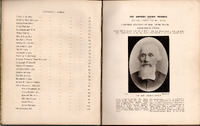 2024.57: Historical Notices of Shipley, Saltaire, Idle, Windhill, Wrose, Baildon, Hawksworth, Eccleshill, Calverley, Rawdon and Horsforth A colllection of articles on the history and notable people in districts of Bradford and surrounding towns and villages. Includes three chapters related to Saltaire: (1) Sir Titus Salt. (2) Saltaire (3) Story's Poem on Saltaire. See also 2024.55 for a facsimile copy from 1985.
 -
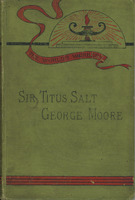 2024.64: Sir Titus Salt and George Moore Sir Titus Salt and George Moore by James Burnley. Green hardback book with image of oil lamp. Part of The World's Workers series. Contains two biographies, one of Sir Titus Salt and the other of his contemporary George Moore who was a lace merchant and philanthropist. This particular book has a handwritten enscription on the first page. It states that the book was presented to 'Wm. Hollingsworth' as a prize for attendance at the Wesleyan Synday School in 1886. Signed by 'Thos. Townsend, Secretary'
 -
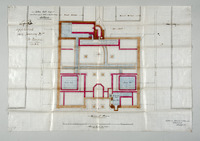 Bath and Wash House, Saltaire, West Yorkshire, United Kingdom Titus Salt built the Bath and Wash houses in 1863 at a cost of £7000 (over £600,000 today). These housed 24 baths, 12 each for men and women and a Turkish bath. A warm bath would cost 6d. and a cold one 3d. The wash house contained everything people would need to wash and dry their clothes: 48 washing, rinsing and steam tubs, 48 drying closets, a steam dryer and mangles, meaning clothes could be cleaned and dried in under 1 hour. As in the rest of the North of England, the Bath and Wash Houses did not prove popular. People preferred to bathe in the privacy of their own homes and wash clothes in their own kitchen where they could also complete other tasks. The buildings were converted into houses in the late 1800s before being completely demolished in 1936. Today, a community garden has been planted on the site, following consultation with residents in 2011.
 -
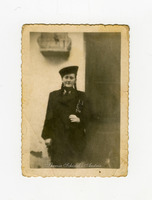 C2a-170: From Austria to Saltaire Booklet: 'From Austria to Saltaire - Theresa Schistal' with 3 loose photocopied photographs of Theresa Mortimer (nee Schistal). Account of Theresa Schistal travelling from Austria to Saltaire in late 1940s to work in Salts Mill.
 -
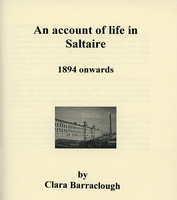 C3a-075a: An account of life in Saltaire: 1894 onwards An account of life in Saltaire 1894 onwards by Clara Barraclough [nee Knott]. Associated with a photograph of the Yorkshire Amateur Swimming Association in 1961 [C3a-075c], Shipley Swimming Team [C3a-075] and a note about Martha Knott.
 -
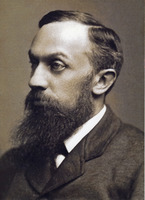 Salt, Titus, Junior Titus Salt Junior (1843–1887) was the fifth and youngest surviving son of [Sir Titus Salt](https://www.saltairecollection.org/story-of-saltaire/biographies/sir-titus-salt/), the founder of Saltaire. He was the member of the Salt family most likely to inherit his father’s business acumen and public role, playing a critical part in the final development of the village's public amenities, particularly its educational facilities. Business and Family Life - Family: In 1866, he married Catherine Crossley, daughter of a wealthy Halifax carpet manufacturer. They had four children: Gordon, Harold, Lawrence, and Isabel. - Milner Field: He purchased the Milner Field estate near Saltaire and built a grand mansion that contrasted with the village's Italianate style. The house featured luxurious interiors, extensive conservatories, and a boating lake, and was used to host royalty, including the Prince and Princess of Wales in 1882. - Textile Firm: He entered the family firm in 1863 at age 20 and eventually managed it alongside his brothers. However, his tenure saw significant financial difficulties due to international trading issues and investments in the United States, eventually leading the company toward voluntary administration shortly after his death. Educational Philanthropy Titus Junior is best remembered for his passionate promotion of education for all ages: - School Board Leadership: He served as the Chairman of the Shipley Schools Board and was vociferous in organizing both day and night school provision. - Kindergarten Method: Along with his wife Catherine, he was an early advocate for the Friedrich Froebel 'Kindergarten' method for children under five. - Albert Road School: He successfully campaigned for the opening of the Albert Road Board School (now Saltaire Primary School) in 1878 to accommodate the growing number of elementary students. - Exhibition Building: He proposed building a new School of Art and Science as a memorial to his father. To fund it, he organized the Royal Yorkshire Jubilee Exhibition in 1887, which was opened by Princess Beatrice. Final Years and Death His final project, the Royal Yorkshire Jubilee Exhibition, proved to be a source of immense stress. Despite its popularity, it did not raise the anticipated funds and resulted in a significant financial loss. On November 18, 1887, after feeling 'indisposed' and sending apologies for an exhibition committee meeting, Titus Junior returned to Milner Field. He was found unconscious in his smoking room and died shortly after at the age of 44. Legacy Titus Junior’s legacy is deeply tied to the Exhibition Building, which continued to provide technical education for over a century and is now part of Shipley College. He is remembered for his dedication to the social and intellectual well-being of the Saltaire community, especially through the establishment of its 'fine group' of schools.
 -
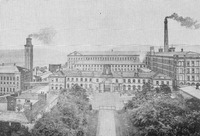 2022.72: Photographic postcards of Saltaire and Shipley from the early twentieth centuries Black and white photographic postcards of various scenes in and near Saltaire and Shipley. Includes: a view of Salts Mill from the United Reformed Church; the bandstand and the status of Sir Titus Salt in Roberts Park; the canal lock near Hirst Wood (about a mile from Saltaire); Market Place in Shipley; the Otley Road bridge over the river AIre in Shipley.
 -
 2025.57: 16 paper prints produced by Ann Stuart as patterns for fabrics created on courses 16 paper prints produced by Ann Stuart as patterns for fabrics created on courses. They include the following: 1. A large brown and green Japanese textile design 2. A black and gold Japanese textile 3. A yellow, grey, black and red floral design numbered 320 4. A blue,red, black and beige pattern with a diamond in the centre with Ann Stuart's signature on the back 5. A red, black and cream pattern with birds and leaves on the front and green and blue paint on the reverse 6. A grey pattern numbered 335 7. A 12 squared blue and white pattern 8. A green orange and blue pattern consisting of circles and squares 9. 3 coloured baubles with leaves 10. A blue and grey willow pattern design 11.A blue, black and red design of flowers and birds 12. A bird with blue flowers, green leaves and red fruit 13. Green, red, blue and yellow leaf pattern 14. Green, red, blue and black circular patteren with diamonds 15. Green, blue, red and yellow rain drop shapes 16. Green, yellow, red diamond pattern with coloured circles
 -
 D3-117: Chinese Sculpture Chinese stone sculpture found during the excavations prior to building the greenhouses for Shipley College Gardens and horticulture students. It is believed that the sculpture was part of a Japanese Village which was part of the in the 1887 Royal Yorkshire Jubilee Exhibition. It is a Taoist scuplture depicting several deities, accourding to a letter from the Deputy Keeper of Ceramics in the Victoria and Albert Museum in 1968. From the left the deities are the Ch'ang the Moon Queen, Ch'ih-chang the Sun King, Shou Lau the God of Longevity with his deer and the central figure is Fu Hsing or Lu Hsingthe God of happiness or weath.
 -
 2025.60: Sir Titus Salt and Sons - a farming legacy Sir Titus Salt and Sons - a farming legacy. A soft covered book revealing that Sir Titus Salt and four of his sons were also involved in agriculture and farming as well as manufacturing The book is a detailed explanation of various aspects of the Kindergarten system, covering: Kindergarten gifts; Occupations; Ordinary school subjects; Singing; and Drill. A book by Alan Cattell building on research by local historians and three members of the Salt family to show that Sir Titus Salt and four of his sons were involved in agriculture and farming
 -
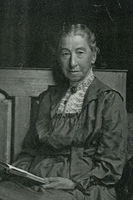 Byles, Harriet Harriet Byles (1853–1937) was a prominent progressive educator who served as the second and longest-serving headmistress of the Salt Girls' High School in Saltaire. Appointed in 1886 as the successor to [ Medina Griffiths](https://www.saltairecollection.org/story-of-saltaire/biographies/ medina -griffiths/), she led the school for 34 years until her retirement in 1920. Background and Appointment - Family: She was born into a prominent non-conformist, Liberal-supporting family in Bradford; her father, William Byles, was the proprietor and editor of the *Bradford Observer*. - Early Career: She taught at the Salt Girls' High School under Medina Griffiths before being promoted to headmistress in 1886. Leadership and School Expansion Under Byles' leadership, the school underwent significant growth and modernization: - Physical Expansion: In 1906, due to an increase in student numbers (partly from absorbing a local pupil teacher centre), the school premises were expanded with a second storey, adding three classrooms, a laboratory, and a domestic science room. - Increased Access: In the early years, the school received no government funding, making it difficult for poorer students to attend. Byles successfully obtained scholarships from the West Riding County Council, which allowed more girls from disadvantaged backgrounds to enroll. - University Progression: A considerable number of her students progressed to higher education, particularly the University of Leeds. Educational Philosophy Byles was known for an inclusive and trust-based approach to education: - Individual Potential: She believed in ensuring every girl achieved her full potential, regardless of her future path. She famously supported the view that schools should not just focus on 'clever' students to win successes while neglecting the 'rank and file'. - Corporate Responsibility: She fostered a strong spirit of comradeship and provided students with 'liberty combined with trust,' which she believed developed a high sense of individual and social responsibility. - Successful Alumni: Her students went on to achieve high-ranking positions, including Edith Dolby (headteacher of Bedford Girls Modern School), Dr. Hilda Byles (head of the Women's Hospital in Hankow), and others who became factory inspectors, medical missionaries, and secretaries to the League of Nations. Retirement and Legacy - Parting Gift: Upon her retirement in 1920, her colleagues presented her with a pony and trap, which she used to travel around her new home in the village of Austwick. - Historical Record: In retirement, she wrote a written reminiscence and an account of her time at the school, which the Saltaire Collection identifies as an invaluable source for understanding the history of education during that period. The Saltaire Collection preserves several items related to her tenure, including her letter of thanks for her retirement gift and copies of her school history.
 -
 2018.9: Isabel Salt collection This collection belonged to Mary Isabel Salt (16.9.1876 - 21.5.1968), who was known as Isabel. Collection created by Isabel was the daughter of Catherine Salt (nee Crossley, who died 1930) and Titus Salt Junior (1843-1887). . Her brothers were Gordon (1866-1938), Harold (1868-1943) and Lawrence Salt (1874-1946). Isabel did not marry but adopted a daughter, Rosemary Golege Steel who was known as Betty (1917-2016). Isabel was born and brought up in the family home of Milner Field, Bingley, Yorkshire until c1903. She lived at various addresses (including 20 Spring Grove, Harrogate, Yorkshire), until moving to Springwood, Oxted, Surrey [1925] where she lived until near her death. Isabel travelled extensively in the UK and Europe from the age of 13 years onwaRoad The records cover her trips to France, the Netherlands, Germany and Italy. The records show that from at least 1909 Isabel was actively involved in the women's suffrage movement; she campaigned with the Women's Liberal Association and identified as a suffragist (rather than a suffragette). They also demonstrate Isabel's wider interest in politics, philosophy and ethics (particularly the League of Nations, militarism and disarmament) and her continued support for Saltaire, notably Saltaire Congregational Church. The collection was kept by Isabel and donated to Saltaire Archive by her family in November 2017. The collection covers the whole of Isabel's life and also includes records relating to family members, notably her mother and brother Lawrence, some of which are in German, French, Dutch and Italian.
 -
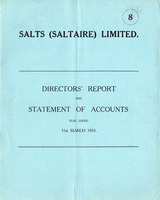 B1-094: Salts (Saltaire) Ltd Directors Report and Statement of Accounts : 31st March 1931 Salts (Saltaire) Ltd Directors Report and Statement of Accounts : 31st March 1931
 -
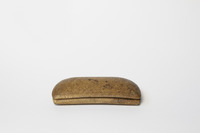 2018.9.6.7: Spectacles and case Round spectacles with translucent orange frames in a Animal skin case. Chamois glasses cleaning cloth. The case is labeled 'Norman J. Fordham. 5 Station Approach, Oxted'. Early-mid 20th century.
 -
 2024.141: Domestic Pests: What they are and how to remove them A book by Laura Hunter on the biology of various domestic pests. Deals with their appearance (with many illustrations), and their lifecycles. Gives advice on preventing and dealing with infestations. The author Lura Hunter (nee Thorpe) was born in 1897 and brought up in Baildon, near Saltaire. She attended Salt Girls High School and went on to study for a B.Sc. at the University of Liverpool. She graduated in 1919. See also 2024.142 for a brief biography of Laura Hunter.
 -
 2025.51: Modern Money and Unemployment and the Law of Barter A book on economic history and contemporary economic problems by Isidore Ostrer. Contains Ostrer's ideas on what he sees as flaws in the modern money system. Ostrer was one of the principle directors of Illingworth, Morris Limited the owners of Salts (Saltaire) Limited which operated Salts Mill.
Catalogue data (excluding media) available under Creative Commons Attribution-ShareAlike (CC BY-SA 4.0) licence.
381–400 of 4449