
Items
Search full-text
without cvv, 【 Visit Amsiga.com 】 ojM3t2s., cc fullz store, bins and fullz, top cc dump sites MoHS
-
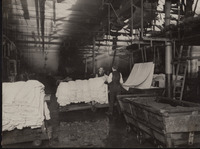 B1-032/4/37: Finishing and washing Photograph shows the finishing room with two men holding a length of white cloth. There is another pile of white cloth to the left of the photograph. To the right is a truck containing coloured cloth with a step ladder behind it
 -
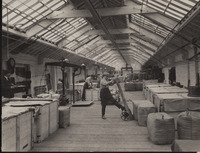 B1-032/4/38: Packing and despatch (1) Photograph shows a number of men packing yarn. There is a man in the centre of the photograph with his foot on a wheeled trolley with two bales of yarn in front. Behind him are two men leaning on a crate. To the left of the photo is a suited man watching the proceedings. He is standing beneath a clock.
 -
 C2b-032: Saltaire Images of Places Collection of 26 photographs and postcards relating to Saltaire.Subjects include: Saltaire Picture House, Roberts Park, trams, various leisure activities.
 -
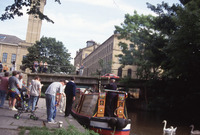 C2b-102/18/12: Apollo barge and mill Apollo barge and mill. One of a collection of Slides relating to Saltaire compiled by Albert Bowtell.
 -
 D1-006: Saltaire Club and Institute Logo Copy of the Saltaire Club and Institute Logo
 -
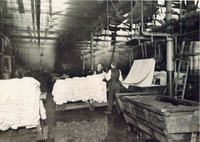 B1-032/3/15: Finishing and washing Photograph shows the finishing room with two men holding a length of white cloth. There is another pile of white cloth to the left of the photograph. To the right is a truck containing coloured cloth with a step ladder behind it.
 -
 Saltaire, West Yorkshire, United Kingdom Saltaire is an area on the Western edge of Shipley in West Yorkshire. The village was created from the 1850s onwards by Bradford industrialist Titus Salt as a location for a new textile mill and homes and amenities for its workers. The village had many public buildings and amenities including: shops, schools, a dining hall, a Club and Institute, and a public park with sporting areas. Most of the village remains intact today. In 2001 Saltaire became a UNESCO World Heritage Site.
 -
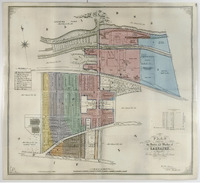
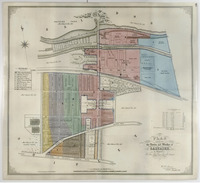 H2-120b: Plan of Salts Mill and village Plan of Salts Mill and Saltaire village. Includes list of original 1850s' land owners, and on reverse, a reference. to 1901
 -
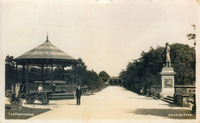 Roberts Park, Saltaire, West Yorkshire, United Kingdom Originally named Saltaire Park, the 14 acre space opened in 1871 and was free for anyone to enjoy. However, there were strict rules enforced in the park. Among other things, political and religious demonstrations were banned, as were wheeled vehicles and unaccompanied children under 8. By the early twentieth century Salts Mill and Saltaire were owned by Sir James Roberts, Roberts retired in 1918 and in 1920 gifted the park to Bradford Corporation for public use. At the same time, the part was renamed Roberts Park in memory of James's deceased son, Bertram Foster Roberts.. The park was originally reached by a bridge from the end of Victoria Road, over the valley to what is now the West entrance, at the lodge. This bridge had to be demolished after World War II, due to damage caused by tanks crossing to use the area for manoeuvres.
 -
 Saltaire Festival Saltaire Festival is an annual event held in Saltaire over ten days in September. It celebrates the local community and its heritage through a wide range of events including family activities, music and dramatic performances, street markets, exhibitions, and te provision and consumption of food and drink. It was first held in 2003, partly to celebrate the 200th anniversary of the birth of Sir Titus Salt and the 150th anniversary of the founding of Saltaire. It also celebrated the recognition by UNESCO of Saltaire as a World Heritage SIte. The Festival is normally held to coincide with the Heritage Open Days organised annually by English Heritage.
 -
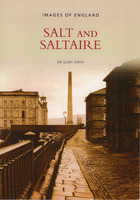 2023.4: Salt and Saltaire Book containing many historical photographs of Saltaire, Salts Mill and places, people and events associated with the family of Sir Titus Salt. There are brief descriptions of the photographs
 -
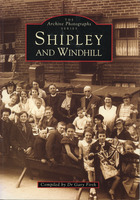 2024.9: The Archive Photographs Series: Shipley and Windhill Photographic history of Shipley and Windhill. Contains information and photographs of Saltaire.
 -
 2024.25: Pacesetter:Special Edition Pace, here and now : May 2008 Pacesetter:Special Edition Pace, here and now : May 2008 Slim,coloured booklet of 6 pages with fold out cover international map included
 -
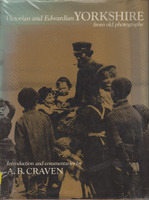 2024.53: Victorian and Edwardian Yorkshire from Old Photographs Hardback book by A B Craven. Book about Victorian and Edwardian Yorkshire. Contains mainly photographs with some brief text descriptions. Contains image of Shipley Glen British Temperance Tea and Coffee House
 -
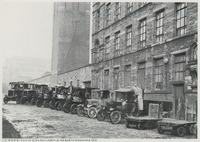 2024.56.11: The transport fleet of Lister and Company at the rear of Manningham Mills Photographs shows aline of vehicles parked in front of Manningham Mills (also known as Lister's Mill). a large textile mill in Bradford. Four of the vehicles are early internal cumbustion engine small trucks,. Three are steam powered trucks.
 -
 2024.62: Saltaire - An album of postcards and prints Red album with black pages containing 104 postcards and prints of images of Saltaire
 -
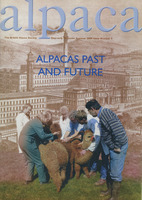 2024.88: Alpaca from the British Alpaca Society Issue 9 Summer 2000 Alpacas past and future Alpaca from the British Alpaca Society Issue 9 Summer 2000 Alpacas past and future. Illustrated magazine with article on Saltaire on pages 16 and 17
 -
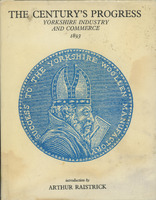 2025.10: The century's progress: Yorkshire industry and commerce 1893 A facsimile reprint of a book from 1893 reviewing trade, industry and commerce in Yorkshire during the nioneteenth century. The first, short part is a review. THe main part of the book is a trade-directory of firms in Yorkshire. Includes drawings of machinery, buildings and products.
 -
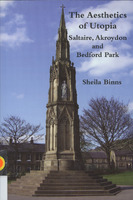 2025.15: The aesthetics of Utopia: Saltaire, Akroydon and Bedford Park Discusses three model industrail villages built in the second half of the nineteenth century. Includes consideration fo their different architectural styles. Has chapeters on: Saltaire (italianate style), Akroydon (in Halifax, gothic style); Bedford Park (west London - QUeen Anne Revival)
 -
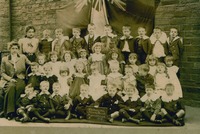 Albert Road School A new primary school on Albert Road in Saltaire was opened in 1878, its creation supported by husband and wife Titus Salt Junior and Catherine Salt. It has remained a primary school until the present day. When it opened, Children at the Albert Road schools were taught in mixed classes of around 40 children, although boys and girls were still seated in separate halves of the room, and corporal punishment was forbidden. At the time, the Shipley and Saltaire Times reported that people were doubtful whether this new approach to education would work. Shortly after their opening, the same newspaper printed a report on the schools and retracted their earlier criticism.
Catalogue data (excluding media) available under Creative Commons Attribution-ShareAlike (CC BY-SA 4.0) licence.
521–540 of 4449