Items
-
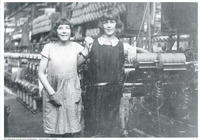 2024.31.2: Fourteen year old winders Salt's Mill 1930s Fourteen year old winders (mill workers) Salt's Mill 1930s. 1 of a set of 12 photographs from the collections of the Saltaire Village Society and the Saltaire Traders' Association
 -
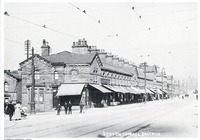 2024.31.3: Gordon Terrace, 1920s Gordon Terrace, 1920s. 1 of a set of 12 photographs from the collections of the Saltaire Village Society and the Saltaire Traders' Association
 -
 2024.31.4: Launch of the open topped tram service in 1902 Launch of the open topped tram service in 1902. 1 of a set of 12 photographs from the collections of the Saltaire Village Society and the Saltaire Traders' Association
 -
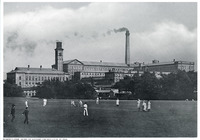 2024.31.5: Roberts Park, home of Saltaire Cricket Club in 1916 Roberts Park, home of Saltaire Cricket Club in 1916 1 of a set of 12 photographs from the collections of the Saltaire Village Society and the Saltaire Traders' Association
 -
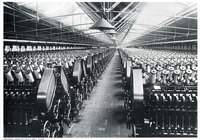 2024.31.6: Spinning shed at Salt's Mill 1940s Spinning shed at Salt's Mill 1940s. 1 of a set of 12 photographs from the collections of the Saltaire Village Society and the Saltaire Traders' Association
 -
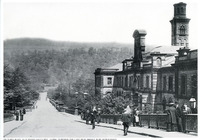 2024.31.7: Victoria Road, as it passes Salt's Mill, going towards the cast iron bridge now demolished Victoria Road, as it passes Salt's Mill, going towards the cast iron bridge now demolished. Early 20th century. 1 of a set of 12 photographs from the collections of the Saltaire Village Society and the Saltaire Traders' Association
 -
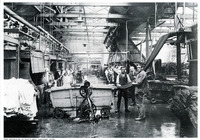 2024.31.8: The dye house at Salt's Mill 1920s The dye house at Salt's Mill 1920s. 1 of a set of 12 photographs from the collections of the Saltaire Village Society and the Saltaire Traders' Association
 -
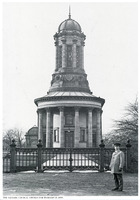 2024.31.9: The Saltaire Church opened for worship in 1859 The United Reform Church, Saltaire. 1 of a set of 12 photographs from the collections of the Saltaire Village Society and the Saltaire Traders' Association
 -
 2024.32: Sir Titus Salt: The founder of Saltaire and its Mills A brief history of the life of Sir Titus Salt and his founding of Saltaire. Includes some discussion of Salt's motivations for building the village and Mill, and the proivision of amenities for the workers and residents.
 -
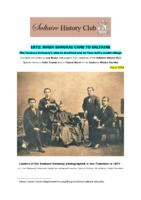 2024.34: 1872: When samurai came to Saltaire A research document from local historian Les Brook on the visit in 1872 of the Japanese Iwakura Embassy visit to Saltaire. The Iwakura Embassy was a high-level governmental group from Japan who toured the world to investigate the latest developments in industry and technology. They visited Saltaire to view the renowned Salts Mill and the model village of Saltaire. Contents include: What was the Iwakura Embassy? The Embassy’s historical backstory The members of the Embassy The Embassy in the USA Four months in Britain The visit to Bradford and Saltaire DAY 1: Thursday 24 October 1872 DAY 2: Friday 25 October 1872 DAY 3: Saturday 26 October 1872 DAY 4: Sunday 27 October 1872 DAY 5: Monday 28 October 1872 From Yorkshire to London The Embassy in continental Europe, and beyond
 -
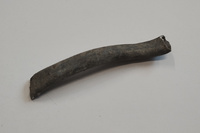 2024.35: Small section of lead gas piping for lighting A small section of lead piping used for the supply of gas in a house in Saltaire. Pipe was found during redecoration of a first-floor rear bedroom in the 2020s. The lower end of the pipe was embedded in original lime plaster and connected to what may have been a wall mounting for a gas mantle. The lack of disturbance to the plasterwork, where the pipe joined the wall, suggests that the pipe was installed during construction of the house. This section of pipe provides direct evidence to corroborate contemporary newspaper reports that gas lighting was provided in Saltaire housing at the time of construction.
 -
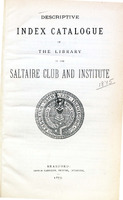 2024.36: Descriptive Index Catalogue of the Library of the Saltaire Club and Institute A full catalogue of the contents of the Library of the Saltaire Club and Institute. Has brief details in the front of the volume of the operation of the LIbrary. Most of the 1665 pages consist of an alphabetical listing of the items held in the Library.
 -
 2024.37: Industrial Revolution in Yorkshire Hardback book by Fred Singleton published in 1970. Book about Industrial Revolution in Yorkshire. Mentions Salts Mill and Sir Titus Salt
 -
 2024.38: British Wool Textile Industry 1770-1914 Hardback book by D T Jenkins & K G Ponting. Mentions Sir Titus Salt and Salts Mill
 -
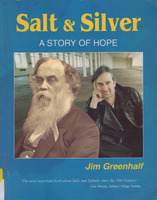 2024.39: Salt and Silver - a story of hope Paperback book by Jim Greenhalf. Biographical treatment of the history of Saltaire focussing on the stories of TItus Salt and Jonathan Silver, the Bradford entrepreneur who bought Salts Mill in the 1980s and transformed it into a new centre for business, leisure and retail.
 -
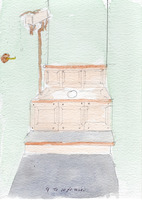 2024.4: Painting of gents' toilets in Saltaire Congregational Church A watercolour painting of wooden toilet in Saltaire Congregational Church. The cistern is visible on the left. The toilet was due to be removed and the painting was made before the removal. There are notes on the back of the painting by the artist (who was a teenager at the time) about when the work was done and why. See also 2024.3.
 -
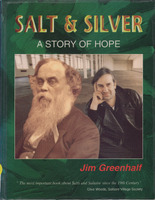 2024.40: Salt and Silver: a story of hope Second, revised edition of a paperback book by Jim Greenhalf. Biographical treatment of the history of Saltaire focussing on the stories of TItus Salt and Jonathan Silver, the Bradford entrepreneur who bought Salts Mill in the 1980s and transformed it into a new centre for business, leisure and retail.
 -
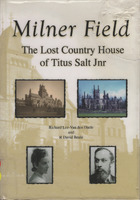 2024.41: Milner Field - the lost country house of Titus Salt jnr Paperback book by Lee-Van den Daele, Richard and Beale, R. David. Illustrated history of Milner Field, a mansion near to Saltaire built for Titus Salt Junior and his wife Catherine. The house was later owned by Sir James Roberts. It has a rather infamous history for a series of tragedies assocatied with it, including the death of Titus Salt Junior at a young age.
 -
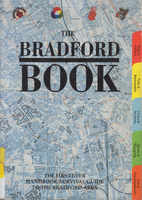 2024.42: The Bradford Book Paperback book with full title 'The Bradford Book: The first-ever handbook/survival guide to the Bradford area' edited by Roger Ratcliffe. Handbook for local residents and visotrs to the geography and history of Bradford as it was in the early 1990s.Mentions Sir Titus Salt
Catalogue data (excluding media) available under Creative Commons Attribution-ShareAlike (CC BY-SA 4.0) licence.