
Items
Search full-text
almshouses
-
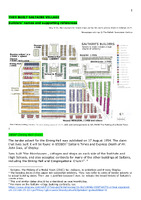 2026.4: They built Saltaire An 8 page document with a plan of the village of Saltaire indicating the parts that were constructed by different builders. The document outlines the key builders and contractors involved in the development of Saltaire village, highlighting their roles, projects, and historical context. A major builder was John Ives, but the document also details others including: Molson, Ingram Lapish, and John Barry. A particular issue addressed is that the term 'building contract' is used, both historically and by the book authors, to refer to a range of items, including invitations to tender as well as actual contracts. Another problem considered is that often contracts were advertised for both public buildings and housing but then subsequently separated.
 -
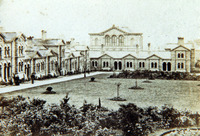 Almshouses, Saltaire, West Yorkshire, United Kingdom Unlike many of his contemporaries, Titus Salt was determined to ensure a decent quality of life for his workers, even after they left his employ. In addition to the many educational institutions he built to allow workers to better themselves, he also commissioned the almshouses on Victoria Road. The 45 almshouses were built to provide shelter for those who couldn’t support themselves, such as widows and injured workers. Although preference was given to workers in Salts Mill and their families, anyone of ‘good character’ and unable to support themselves was eligible. Although this was unusually generous by the standards of the time, residents were subject to strict rules on their behaviour and the maintenance of the houses. In what is now No. 29, there was originally a small chapel to save residents walking down to the Congregational Church. On opening it, Salt is reported to have said: 'My sole desire is that you should be happy, and nothing would give me greater pleasure than to know that you are so'.
 -
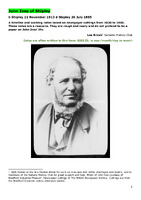 2026.1: John Ives timeline and notes A 78 page document with notes, newspaper exceprts and some excerpts from plans and maps all relating to the life and activities of John Ives. John Ives was a major builder during the mid to late nineteenth century in Bradford and surrounding areas. He built Bradford's new town hall, and many buildings in Saltaire.
 -
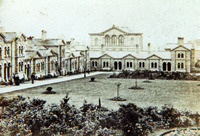 C2b-147F: The Saltaire almshouses with the Methodist Church Photograph of The almshouses with the Methodist Church (6)
 -
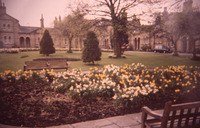 C2b-102/1/10: Almshouses view up Almshouses view up. One of a collection of Slides relating to Saltaire compiled by Albert Bowtell.
 -
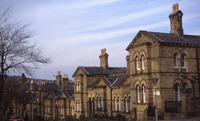 C2b-102/1/3: Almshouses (46) Almshouses (46). One of a collection of Slides relating to Saltaire compiled by Albert Bowtell.
 -
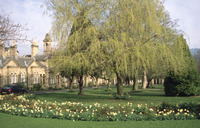 C2b-102/1/4: Almshouses (47) Almshouses (47). One of a collection of Slides relating to Saltaire compiled by Albert Bowtell.
 -
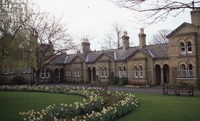 C2b-102/1/5: Almshouses (48) Almshouses (48). One of a collection of Slides relating to Saltaire compiled by Albert Bowtell.
 -
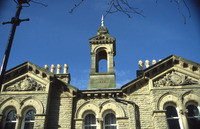 C2b-102/1/6: Almshouses Monogram Almshouses Monogram. One of a collection of Slides relating to Saltaire compiled by Albert Bowtell.
 -
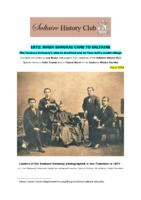 2024.34: 1872: When samurai came to Saltaire A research document from local historian Les Brook on the visit in 1872 of the Japanese Iwakura Embassy visit to Saltaire. The Iwakura Embassy was a high-level governmental group from Japan who toured the world to investigate the latest developments in industry and technology. They visited Saltaire to view the renowned Salts Mill and the model village of Saltaire. Contents include: What was the Iwakura Embassy? The Embassy’s historical backstory The members of the Embassy The Embassy in the USA Four months in Britain The visit to Bradford and Saltaire DAY 1: Thursday 24 October 1872 DAY 2: Friday 25 October 1872 DAY 3: Saturday 26 October 1872 DAY 4: Sunday 27 October 1872 DAY 5: Monday 28 October 1872 From Yorkshire to London The Embassy in continental Europe, and beyond
 -
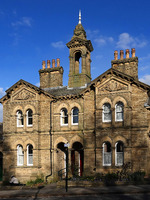 2025.68.102: Saltaire Almshouses on Bingley Road Saltaire almshouses on Bingley Road
 -
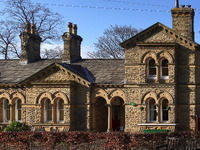 2025.68.103: Saltaire Almshouses on Victoria Road Saltaire almshouses on Victoria Road
 -
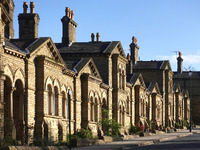 2025.68.104: Saltaire Almshouses on Victoria Road Saltaire almshouses on Victoria Road (2)
 -
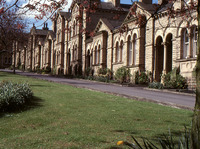 2025.68.123: Saltaire Almshouses on Victoria Road Saltaire almshouses on Victoria Road (3)
 -
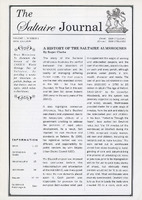 2024.91: The Saltaire Journal Vol1 No3 July 2009 A History of the Saltaire Almshouses Includes snippets about the Salts Band with photograph, a demonstration of Edison's phonograph at Victoria Hall in 1890, George Salt and a double decker steam tram and information about Titus Salt's early investigations into alpaca fibre. Also includes a book review of Saltaire United Reformed Church 150 years anniversary 2009 church history
 -
 C2b-035: Almshouses Mounded coloured photograph of the almshouses
 -
 C2b-051: Victoria Road almshouses Mounted copy of postcard of Victoria Road almshouses
 -
C2b-145: Two postcards showing Roberts Park and the almshouses Laminated copy of two postcards. One of women with pram sat in Roberts Park by Bandstand (coloured); One of the top section of Victoria Road showing the Almshouses
-
C2b-286c: Almshouses, and Half-Moon Cafe One of a folder of mounted postcards and photographs of Saltaire.Almshouses, and Half-Moon Cafe in Roberts Park
-
C2b-323: Sir Titus Salt's Hospital & almshouses Photograph of the Sir Titus Salt's Hospital and adjacent almshouses on Victoria Road, Saltaire.
Catalogue data (excluding media) available under Creative Commons Attribution-ShareAlike (CC BY-SA 4.0) licence.
1–20 of 43