
Items
Search full-text
griffiths
-
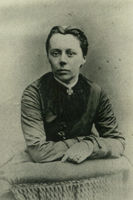 Griffiths, Medina Medina Griffiths (1840–1927) was an outstanding and progressive educator who served as the first headmistress of the Salt Girls' High School in Saltaire. Appointed in 1876, she was known for her 'outstanding character and ability' and her commitment to providing girls with an education equal to that of boys. Early Life and Background Born in Wales in 1840, Medina was the daughter of a Congregational minister. Before moving to Saltaire, she taught at a school near Cardiff. Leadership at Salt Girls' High School Medina Griffiths led the school during its formative years: - Establishment: The girls' school opened in 1876, initially sharing a building on Victoria Road with the Factory School before the younger children moved to a new site on Albert Road in 1878. - Broad Curriculum: She introduced a wide range of subjects, including Latin, Greek, French, mathematics, drama, art, and music. - University Aspirations: She actively encouraged her students to remain in education and pursue university degrees, which many did. - Succession: She remained headmistress until 1886, when she was succeeded by Harriet Byles, who had previously taught under her. Educational Philosophy and Teaching Style Griffiths was considered an inspirational and enlightened teacher with several unique approaches to education and discipline: - Equality for Girls: She famously stated, 'I would have girls placed on an equality with boys so far as educational advantages are concerned…I would have girls stand in the foremost rank'. - Holistic Learning: She believed lessons in 'patience, unselfishness, self-control and attention to detail' could be learned as effectively through well-directed plays as through traditional schoolwork. - Approach to Discipline: She set a rule that girls should have no more than one hour of homework per day, believing that five hours of work during the school day was sufficient. - Student Relationships: She was known to be witty and musical, often reading to students during mealtimes. On her birthdays, she entertained students at her home, where each girl brought a gift of toys or clothing to be donated to charity. The Saltaire Collection preserves records of her tenure, including school certificates bearing her signature and that of Titus Salt Junior.
 -
 E1a-018a-b: Miss MSGriffiths, First Headmistress of the Salts School A booklet: 'Miss M.S.Griffiths, First Headmistress of the Salts School' by Evaline L. Griffiths. In the 1870s Sir Titus Salt decided to change the use of the Factory schools building on Victoria Road, Saltaire, and opened new high schools for girls and boys. The girls' school was first open in 1876, and Medina Griffiths was appointed as the first Headmistress.
 -
 E1b-080a: Medina Sarah Griffiths & Harriet Byles A pair of photos of Medina Sarah Griffiths and Harriet Byles (the first and second headmistresses respectively of the Salt High School for Girls). They are part of collection of photographs and programmes of Salts Girls High School Theatrical productions.
 -
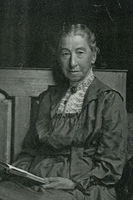 Byles, Harriet Harriet Byles (1853–1937) was a prominent progressive educator who served as the second and longest-serving headmistress of the Salt Girls' High School in Saltaire. Appointed in 1886 as the successor to [Medina Griffiths](https://www.saltairecollection.org/story-of-saltaire/biographies/medina-griffiths/), she led the school for 34 years until her retirement in 1920. Background and Appointment - Family: She was born into a prominent non-conformist, Liberal-supporting family in Bradford; her father, William Byles, was the proprietor and editor of the *Bradford Observer*. - Early Career: She taught at the Salt Girls' High School under Medina Griffiths before being promoted to headmistress in 1886. Leadership and School Expansion Under Byles' leadership, the school underwent significant growth and modernization: - Physical Expansion: In 1906, due to an increase in student numbers (partly from absorbing a local pupil teacher centre), the school premises were expanded with a second storey, adding three classrooms, a laboratory, and a domestic science room. - Increased Access: In the early years, the school received no government funding, making it difficult for poorer students to attend. Byles successfully obtained scholarships from the West Riding County Council, which allowed more girls from disadvantaged backgrounds to enroll. - University Progression: A considerable number of her students progressed to higher education, particularly the University of Leeds. Educational Philosophy Byles was known for an inclusive and trust-based approach to education: - Individual Potential: She believed in ensuring every girl achieved her full potential, regardless of her future path. She famously supported the view that schools should not just focus on 'clever' students to win successes while neglecting the 'rank and file'. - Corporate Responsibility: She fostered a strong spirit of comradeship and provided students with 'liberty combined with trust,' which she believed developed a high sense of individual and social responsibility. - Successful Alumni: Her students went on to achieve high-ranking positions, including Edith Dolby (headteacher of Bedford Girls Modern School), Dr. Hilda Byles (head of the Women's Hospital in Hankow), and others who became factory inspectors, medical missionaries, and secretaries to the League of Nations. Retirement and Legacy - Parting Gift: Upon her retirement in 1920, her colleagues presented her with a pony and trap, which she used to travel around her new home in the village of Austwick. - Historical Record: In retirement, she wrote a written reminiscence and an account of her time at the school, which the Saltaire Collection identifies as an invaluable source for understanding the history of education during that period. The Saltaire Collection preserves several items related to her tenure, including her letter of thanks for her retirement gift and copies of her school history.
 -
 C4a-015.6: Saltaire History Club Meeting for December 2007 A4 poster for Saltaire History Club Meeting for December 2007 The development of women's education from 1870s through to the 1950s. 'Djihabs and gymslips' by Hattie Townsend and 'Medina Griffiths, Modern Miss and Saltaire Headmistress Extraordinaire' by Pamela Reynolds.
 -
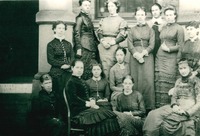 E1b-067a: Salts High School Staff Mounted photograph of 'Salts High School Staff' taken around the 1880s with both Medina Griffiths (current headmistress) and Harriet Byles (future headmistress) identified.
 -
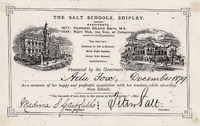 E1a-021a: Salts School certificate Copy of a 'Salts School certificate' for Ada Fox on leaving the Salts School, Shipley in 1879. There are drawings of the Institute and the main Salt Schools building on Victoria Road. The certificate is signed by Medina Griffiths (headmistress of Salt High School for Girls) and Titus Salt Junior (chairman of the board of governors).
 -
C3b-424a: The Story of the Salts Girls School for Fifty Years (1876-1926): Reminiscences of Harriet Byles Head MIstress 1886-1920 A copy from the Saltaire Resource Base of Harriet Byles's reminiscences of working at the Salt High School fo Girls from the 1870s until retitement in 1920. Byles started as a teacher when the first headmistress was Medina Griffiths. Byles became the second headmistress in 1886 and continued a programme of progressive, wide education for her students.
-
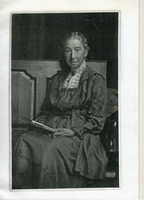 E1a-016b: The Story of the Salts Girls School for Fifty Years: Reminiscences of Harriet Byles, Headmistress 1886-1920 Harriet Byles's reminiscences of working at the Salt High School for Girls from the 1870s until retitement in 1920. Byles started as a teacher when the first headmistress was Medina Griffiths. Byles became the second headmistress in 1886 and continued a programme of progressive, wide education for her students.
 -
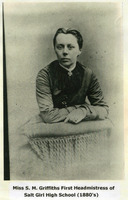 E1b-060b: Miss SMGriffiths, the first Salts High School for Girls Headmistress Photograph of Miss S.M.Griffiths, the first Salts High School for Girls Headmistress
Catalogue data (excluding media) available under Creative Commons Attribution-ShareAlike (CC BY-SA 4.0) licence.
1–10 of 10