
C2a-141g: Drawing out the Threads Interview: Antoni Janowicz
Item
- Identifier
- C2a-141g
- Title
- Drawing out the Threads Interview: Antoni Janowicz
- Type
- video
- Format
- video recording
- Date Created
- 2013
- Creator
- Harrison, Annie
- Description
-
One of a collection of 9 DVD discs with interviews by Annie Harrison for her project 'Drawing out the Threads'. This disc contains interviews with former Salts Mill employee Antoni Janowicz.
The interview details the technical and social experiences of a worker involved in the combing process at Salts Mill. - Associated person or organisation
- Janowicz, Antoni
- Associated place or event
-
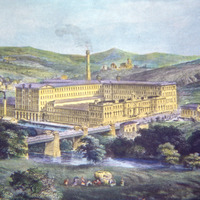 Salts Mill, Saltaire, West Yorkshire, United Kingdom
- Source
- Harrison, Annie
- Rights
- Only viewable in the Saltaire Collection
- Rights Holder
- Copyright Annie Harrison
- Abstract
-
The Combing Process and Machinery
The worker describes a combing machine approximately 2 meters across. The process involved feeding balls of fluffy wool through a mechanism consisting of pins, brushes, and needles. The machinery functioned by moving components in opposite directions to tear the wool apart and straighten it before feeding it through a tube into cans. A byproduct of this process was 'shoddy', which was described as waste wool or dusty fluff that fell under the machine.
Working Conditions
The mill environment was extremely hot because the machines were heated by pipes similar to central heating. The metal was hot enough to burn hands, and the physical labor caused workers to be 'running with sweat', particularly inside their heavy boots.
Workload and Material Management:
-Workers typically operated two machines, increasing to three during overtime.
-The job became more difficult if the wool was dry, as the 'ends' would break, requiring the worker to join the new and old parts together.
-The wool arrived damp to prevent it from looking like a 'big afro haircut' and was sometimes sprayed with water to help it 'catch the twist'. (The term '[weight?]' or 'wages' in this context is uncertain).
Social Dynamics and Communication
Despite the presence of different nationalities, such as Polish and other non-English workers, the atmosphere was friendly. Workers supported one another, such as by covering for each other during toilet breaks. Due to the intense noise of the machinery, verbal communication was nearly impossible, leading workers to rely on lip reading to talk to one another.
- Persistent address
- https://explore.saltairecollection.org/s/p/item/16885
- Item sets
- Saltaire Collection
Export
Catalogue data (excluding media) available under Creative Commons Attribution-ShareAlike (CC BY-SA 4.0) licence.