
C2a-141h: Drawing out the Threads Interview: Jozef Galeza
Item
- Identifier
- C2a-141h
- Title
- Drawing out the Threads Interview: Jozef Galeza
- Type
- video
- Format
- video recording
- Date Created
- 2013
- Creator
- Harrison, Annie
- Description
-
One of a collection of 9 DVD discs with interviews by Annie Harrison for her project 'Drawing out the Threads'. This disc contains interviews with former Salts Mill employee Jozef Galeza.
An interview with a former mill worker regarding the layout and operations of Salts Mill. - Associated person or organisation
- Galeza, Jozef
- Associated place or event
-
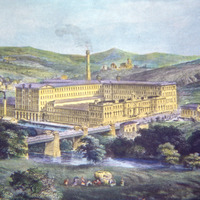 Salts Mill, Saltaire, West Yorkshire, United Kingdom
- Source
- Harrison, Annie
- Rights
- Only viewable in the Saltaire Collection
- Rights Holder
- Copyright Annie Harrison
- Abstract
-
Mill Layout and Environment
The mill was a multi-level facility with three main entrances.
-Ground Floor: Contained the primary processing areas, divided into three rooms.
-Basement/Lower Level: Used for initial stages like the washroom.
-Upper Floor: Accessed by steps and used for dyeing.
The work environment was described as very light due to large windows, but it was also hot (especially near the backwashes) and smelly. The interviewee noted that the smell and the chemicals used in the water often caused headaches.
The Wool-combing Process
The interviewee described a specific sequence for processing the wool:
1. Washing: Performed in a very smelly washroom.
2. Carding: Initial processing of the wool.
3. Backwashing and Boxes: Used to wash and dry the wool further.
4. Punching: A process that created a 'ball' of wool to be fed into the combs.
5. Combing: The main operation, with approximately 12 machines per room.
6. Finishing: The final stage of the process.
Work and Maintenance
The interviewee was highly experienced and capable of performing every job in the department, including backwashing, punching, and combing. In the combing area, a single worker originally managed two machines, but this was later increased to three machines per person.
While specialized mechanics handled major repairs, the workers were responsible for:
-General cleaning and clearing wool blocks.
-Changing pins on the wheels when they broke.
-Replacing entire wheels, which were then sent elsewhere for repair.
- Persistent address
- https://explore.saltairecollection.org/s/p/item/16886
- Item sets
- Saltaire Collection
Export
Catalogue data (excluding media) available under Creative Commons Attribution-ShareAlike (CC BY-SA 4.0) licence.